The artificial intelligence landscape has advanced significantly. Just a few years ago, people were talking about generative AI, which are systems that can write emails, make pictures, and summarize texts. We are on the edge of a new era today: agentic AI.
While generative models are reactive (they do what you ask), agentic AI is proactive. These are digital teammates that don’t just answer questions they reason, plan, and execute complex tasks autonomously. According to Gartner, by the next two years, AI agents will make 15% of everyday workplace decisions, a significant leap from virtually zero in 2024.
For business leaders, this shift from “knowing” to “doing” represents the single most significant opportunity for operational efficiency since the advent of cloud computing. The question is no longer if you should adopt AI, but how you can seize the agentic AI advantage to outpace your competition.
What is Agentic AI? Moving Beyond Copilots
To understand the value, we must distinguish between the tools of yesterday and the agents of tomorrow.
Copilots (Passive Assistants):
These tools operate on a “query and response” model. They require constant human prompting. If you need to generate a sales report, you ask the copilot to do it. If you need to send that report to a client, you have to trigger that action manually.
Agents (Autonomous Executors):
Agentic AI systems possess four core capabilities that redefine automation:
- Reasoning: They can break down a high-level goal (e.g., “Improve customer retention for Q3”) into a series of logical steps.
- Memory: They retain context across long-running workflows, learning from past interactions to improve future outcomes.
- Planning: They determine the optimal sequence of actions to achieve a goal.
- Tool Use: They can interact with your digital ecosystem CRMs, ERPs, email clients, and databases to execute tasks without human intervention.
In short, an AI agent doesn’t just tell you how to do something; it does it for you, within your established security guardrails.
Where Agents Deliver Value
While the technology is exciting, the business case for agentic AI is grounded in hard metrics. Enterprises implementing autonomous agents are seeing measurable impacts across three critical areas:
1. Unprecedented Operational Efficiency
Traditional automation (RPA) relies on rigid rules. Agentic AI adapts. In customer support, for example, a standard chatbot can answer FAQs.
An AI Agent can identify a frustrated customer based on sentiment analysis, access the backend system to diagnose a billing issue, apply a courtesy credit, and schedule a follow-up all without a human ever touching the ticket.
The Impact: Companies are reporting 40-60% reductions in manual processing time and a 30-50% decrease in support tickets requiring human intervention.
2. Revenue Growth Through Intelligent Orchestration
Sales teams often spend 70% of their time on administrative tasks rather than selling. Agentic AI changes this dynamic. Sales & Lead Qualification Agents can engage inbound leads 24/7, qualify them against your ICP, book meetings directly into the calendar, and even populate the CRM with enriched data.
The Impact: Organizations leveraging these agents are seeing 2x win rates and 33% increases in customer spend as agents surface cross-sell and upsell opportunities that human reps might miss.
3. Scalability Without Linear Headcount Growth
In a traditional business model, scaling operations requires scaling staff. Agentic AI decouples growth from headcount. Workflow Automation Agents and Multi-Agent Systems allow you to handle 10x the volume of work without hiring 10x the people. They work tirelessly, handling the “swivel-chair” work of moving data between systems so your human talent can focus on strategy and relationships.
The Roadmap to Agentic Maturity: From Pilot to Production
Despite the promise, only 16% of AI initiatives have scaled enterprise-wide. The difference between successful and failed implementations lies not in the technology, but in the strategy. To seize the agentic AI advantage, organizations must move from fragmented experiments to a unified architecture.
Here is how successful enterprises are structuring their approach:
1. Start with High-Fidelity Use Cases
Don’t try to automate the entire business at once. Start with well-defined, repetitive tasks where the “before” state is easy to measure. Common entry points include:
- Customer Support: Automating ticket triage and resolution for common issues.
- IT Service Desk: Handling password resets and access requests.
- Sales Operations: Lead qualification and meeting scheduling.
2. Build on a Unified Orchestration Layer
Agentic AI works best when it can “see” across your entire technology stack. The most successful implementations use a unified orchestration layer (such as n8n or custom-built workflows) that connects your CRM, ERP, knowledge base, and communication tools. This allows agents to access the context they need to make accurate decisions without being siloed.
3. Prioritize Governance and Observability
Autonomy requires trust. To trust an agent, you must be able to see its “thought process.” Implementing agent observability—logging exactly why an agent took a specific action—is non-negotiable. This creates the audit trail necessary for compliance and allows for continuous improvement of the agent’s performance.
Multi-Agent Systems Future
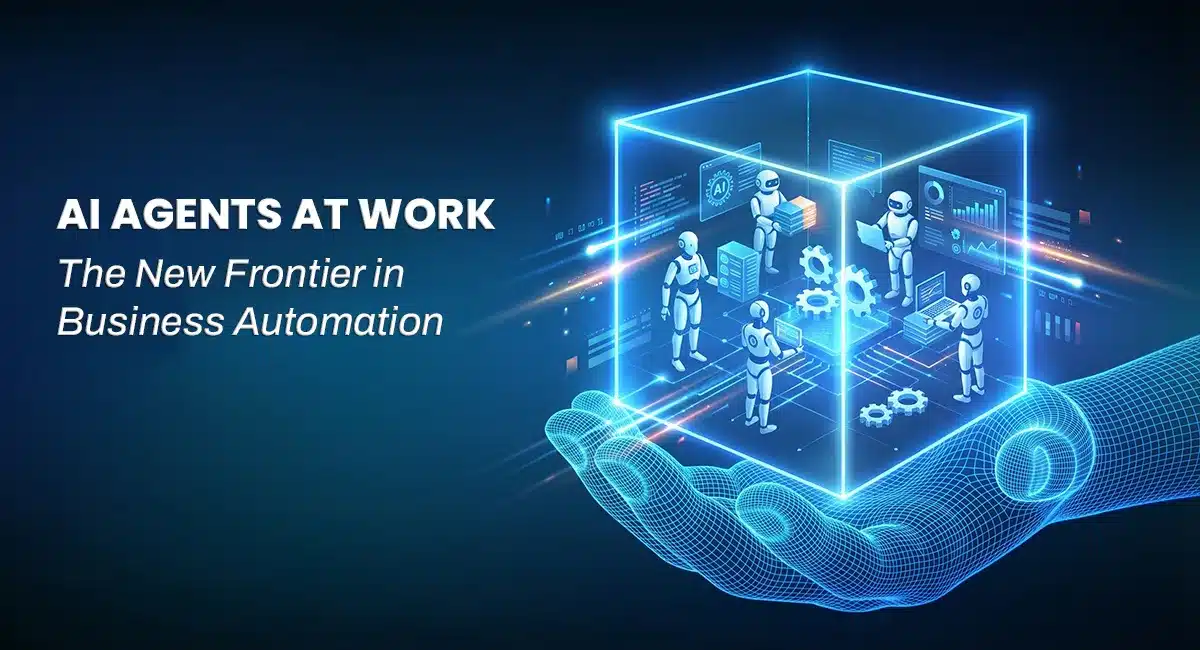
As organizations mature, the next frontier is the Multi-Agent System. Instead of one monolithic bot trying to do everything, imagine a team of specialized agents working in concert:
- A Research Agent gathers data.
- A Drafting Agent creates a proposal.
- A Compliance Agent checks the proposal against regulatory standards.
- A Scheduler Agent books the review meeting.
This swarm of agents collaborates, delegates, and verifies each other’s work. This architecture is how enterprises will ultimately achieve true end-to-end automation, moving beyond simple task automation to complex business process orchestration.
The Time to Act is Now
The shift to agentic AI is not a distant future—it is happening now. Organizations that seize this advantage will enjoy faster cycle times, leaner operations, and the ability to reallocate their best talent from repetitive tasks to strategic growth initiatives. Those who wait will find themselves playing catch-up in a market where the speed of execution is the ultimate competitive moat.
Building autonomous agents requires more than just access to LLMs; it requires deep expertise in integration, security, and workflow design. You need a partner who understands how to connect these intelligent systems to your existing infrastructure without disrupting the business.
Ready to Build Your Autonomous Workforce?
Ready to move beyond the hype? Our team of experts is ready to help you identify the high-impact use cases that will deliver immediate ROI.
FAQs:
- What is the difference between a chatbot and an AI agent?
A chatbot is typically rule-based or limited to retrieving information from a knowledge base. It responds to what you ask. An AI agent is proactive and autonomous. It uses reasoning and planning to complete tasks, can use tools (like updating a CRM or sending an email), and retains memory across sessions to handle complex, multi-step workflows without constant human prompting.
- Are AI agents secure enough for enterprise use?
Yes, but security must be architected from the start. Enterprise-grade AI agents require role-based access controls (RBAC) , single sign-on (SSO) integration, and comprehensive audit logging. Additionally, modern agentic frameworks allow you to define strict guardrails that limit what tools the agent can access and what actions it can take, ensuring that autonomy does not come at the expense of compliance.
- How quickly can we see ROI from deploying AI agents?
ROI timelines vary based on use case, but organizations typically see payback in under 6 months. The fastest returns come from automating repetitive, high-volume tasks like customer support triage, lead qualification, or IT help desk requests. By establishing a baseline (e.g., “It takes our team 3 hours to process a claim”) before deployment, companies often see 40-90% time reductions almost immediately after implementation.