
What Is AI Automation?
AI Automation combined Artificial Intelligence with smart technologies to handle complex tasks and execute repetitive tasks with minimal human involvement. From my experience working across business environments, it doesn’t mean removing people it means building systems that boost efficiency and empower teams to focus on high-value work. It uses technology to enhance human decision-making, supporting strategic process improvements, ensuring smarter operations, stronger machine capabilities, sharper problem-solving, and continuous growth.
The Evolution of AI Automation
The AI and automation journey has been remarkable. Machines started performing repetitive tasks, making work easier.
- Early Automation: It began with simple rules to improve basic processes, allowing machines to handle structured work without human involvement at every step.
- Introduction of AI: Gave machines the ability to handle complex data, think logically, and make smarter decisions across different industries and workflows.
- Integration: Now transforms how businesses operate and enhances overall productivity by connecting intelligent systems deeply into everyday processes and operations.
What Are the Benefits of AI Automation?
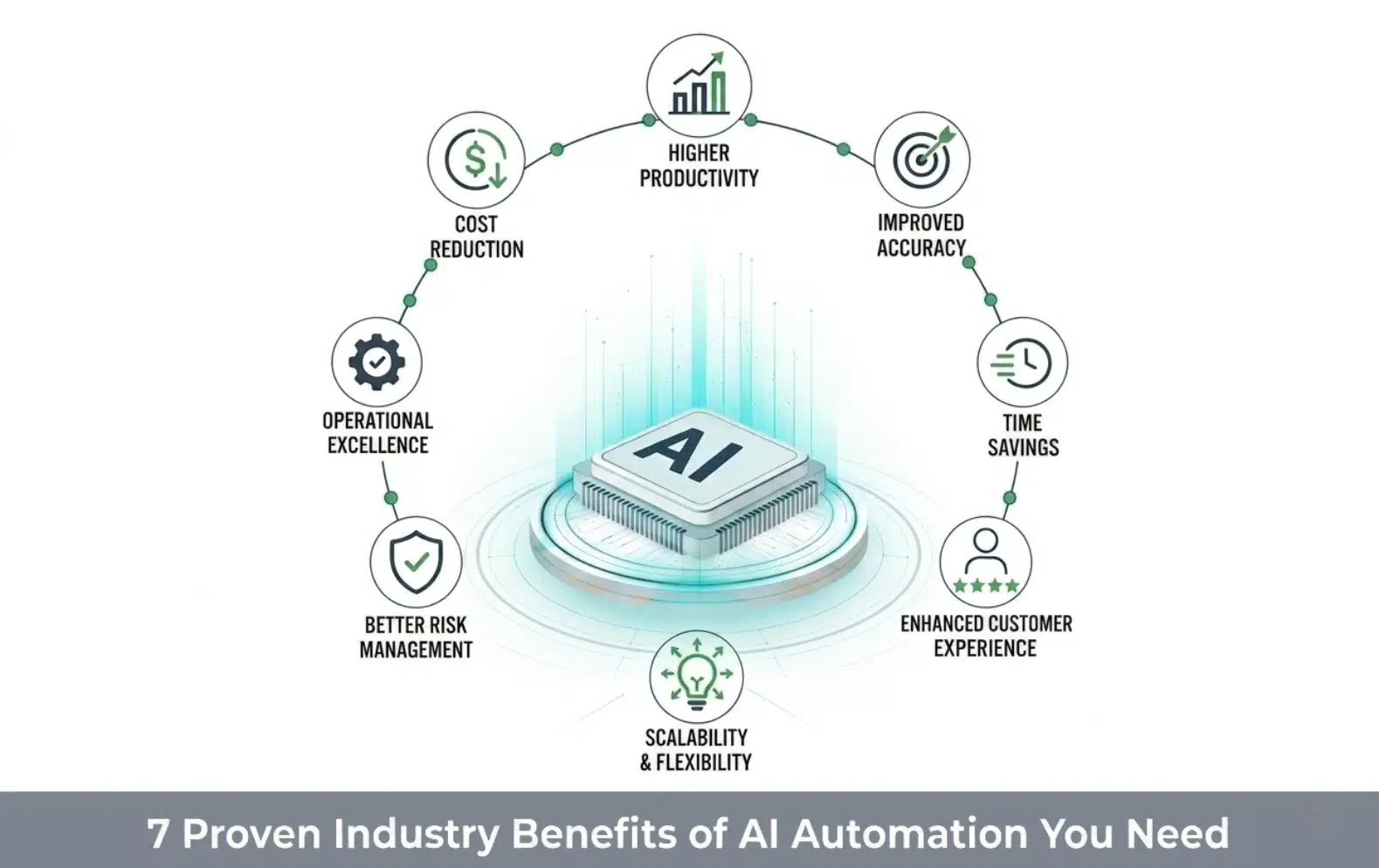
Let’s explore some of the real-world ways AI automation shapes modern businesses and unlocking powerful benefits:
- Increased Efficiency & Speed
Research from the Neilson Norman Group shows that AI-powered customer support agents can handle more inquiries per hour than traditional methods, with a 13.8% boost in productivity. From my experience working with generative AI tools, AI automation delivers a 66% performance improvement on average, and it can lead to greater gains in complex cognitive tasks. This increased efficiency compounds over time as AI systems learn and optimize processes. I once saw a fintech company save an entire quarter of time because AI made them able to make things faster, eliminates bottlenecks that traditionally limited human productivity.
- Cost Savings & Reduced Errors
AI-driven automation transforms business cost management by pulling insights from multiple sources and enabling optimized resource allocation. Errors get eliminated faster across cycles, protecting revenue streams. With savings projected to reach trillions by 2026, tools like Maestra prove why AI remains a trillion-dollar opportunity.
- Improved Decision-Making Through Data Insights
AI-powered analytics give businesses the speed to analyze massive datasets that humans cannot process manually. AI can detect patterns, trends, and predict outcomes in real-time, making it impossible to overlook critical shifts. This helps identify opportunities, respond to market changes, and improve accuracy when identifying what matters most.
- Enhanced Customer Experience
AI automation systems help businesses analyze customer history, behavior patterns, and preferences to deliver personalized interactions that feel genuinely satisfying. From my experience, these systems drive more efficient engagement because choosing a path that enhances business efficiency through AI ultimately results in higher satisfaction scores and builds lasting loyalty with every customer.
AI Across Every Industry
Healthcare
EHRs hold mountains of data, and the real shift happens when you automate how that data moves. From intake form processing to extracting patient records, automation helps providers streamline daily operations without drowning in paperwork.
Scheduling, patient inquiries, and updates can all be auto-routed based on urgency. You can classify and prioritize requests so critical cases never wait behind routine ones, something I’ve seen make a measurable difference in clinic workflows.
Review, audit, regulatory preparation, and summarize reports, automation handles the compliance side so providers stay focused on care.
Insurance
Insurance workflows involve heavy documentation, manual reviews, and long regulatory checks. Delays and errors can lead to dissatisfied customers and serious compliance risks.
Automation speeds up the whole journey, from intake to payout. Simple claims now flow straight through without human touchpoints, while underwriting stays consistent because data is extracted the same way every time.
Teams get answers sooner, and regulators receive a clean paper trail with every submission.
eCommerce
eCommerce teams constantly manage high volumes of customer interactions, product data, and sales reporting. Without help, manual work across these areas can lead to stockouts, delayed responses, and missed revenue opportunities.
Shoppers expect a sharper storefront experience, and AI automations deliver faster than any human team could. Support triages tickets by intent and sentiment, letting humans handle real problems while keeping promotions and inventory in sync with fewer misses and more wins for your team.
Tools auto-generate SEO descriptions, personalize marketing campaigns at scale, classify and route requests, draft FAQs, and keep merchandising stays clean to lifts search visibility, while daily trend reports help you summarize performance and stay ahead.
Supply Chain
AI automations have changed how supply chains run, shifting teams from reacting to anticipating. By using accurate forecasts, companies can predict demand, avoid stockouts, and auto-generate purchase orders before shortages hit.
Real time tracking across routes helps optimize shipment routing, cutting miles, fuel, and delays. When exceptions arise, clear playbooks keep every partner, customer, and team member in the loop through clear communication, reducing missed updates and costly delays caused by manual errors.
In procurement and finance, AI automations classify invoices, auto-approve low-risk vendor payments, summarize supplier costs, and generate spend reports for leadership to act on.
EdTech
EdTech companies face real challenges: scaling learner support while managing administrative overhead like manual grading, progress tracking, and onboarding that slow growth.
Ops runs smoother when teachers get their time back. A few clicks place early warning signals that roll out automatically, flagging at-risk students for help earlier. Feedback scales without losing the human touch.
How to Implement AI Automation
Identifying Processes for Automation
Knowing where to begin with AI automation makes everything easier and more effective.
- Focus on repetitive tasks that take a lot of time and follow fixed steps.
- Use WorkDone’s audit tool to search and identify right high-impact opportunities immediately.
- Consider workflows done manually with rule-based logic and minimal human input, like order-to-cash, data entry, invoice processing, or customer service inquiries, as these help you prioritize what to automate first, save costs, and improve experiences.
Selecting the Right Tools
The next step after identifying which processes to automate is picking what actually works for your setup.
- Choose tools based on factors like ease of use — a user-friendly tool keeps your team moving without a steep learning curve.
- Check security: enterprise-grade solutions like WorkDone’s AI ensure your data stays protected at every stage.
- Think about scalability — the right platform should grow alongside your business without forcing costly upgrades.
- Confirm integration so new tools work seamlessly with your existing systems from day one.
Building a Skilled Team
A strong team is essential for the successful implementation of AI automation.
- Include technical and non-technical members
- Training helps everyone understand the tools
- Encourage collaboration for smooth operations
Teams that adapt to new technologies consistently improves overall efficiency, and proper integration with existing systems ensures everything continues to work well.
Measuring Success
Tracking results shows whether your automation is truly delivering value:
- Track time saved on automated tasks
- Measure cost reductions and improved efficiency
- Monitor customer satisfaction ratings consistently
- Review increases in cash flow and profit
The Future of AI Automation
AI and predictive analytics make the future of businesses look bright. They enhance data collection and analysis, helping companies make better decisions and predict customer behavior more accurately.
Automation gives teams powerful tools, boosting operational efficiency and creating real value by enhancing team capabilities, not replacing them. It frees the workforce from repetitive tasks to focus on higher-level, strategic work that drives innovation and growth.
Keeping humans in the loop while saving costs, investing in developing critical skills, and creating an agile, future-ready team means maximizing potential through a balanced approach that amplifies human contributions for faster, smarter outcomes, optimizing workflows, empowering employees, and building sustained success with a long-term competitive advantage.