In 2026, AI workflow automation is no longer a distant innovation sitting in a lab. It is becoming the core engine of business transformation across industries. The U.S. economy alone stands to capture massive value, with McKinsey estimating that AI adoption could generate $4.4 trillion in global productivity gains annually by automating knowledge work and decision-heavy processes.
Despite these gains, most enterprises today automate less than 20% of their workflows. That leaves an enormous room for improvement in efficiency, accuracy, and the ability to scale operations without growing headcount.
U.S. enterprises are under real pressure to do more with less, facing talent shortages, regulatory complexity, and competitive pricing on all sides. The value of automation today is shifting from just saving time to actually embedding intelligence into everyday workflows, so decisions come out faster, cleaner, and smarter through AI automation.
This article covers seven key industries across the U.S. where AI workflow automation platforms like eZintegrations™ are helping organizations unlock real benefits across finance, healthcare, logistics, legal, and manufacturing. The impact is not just visible — it is accelerating fast.
1. Healthcare and Life Sciences
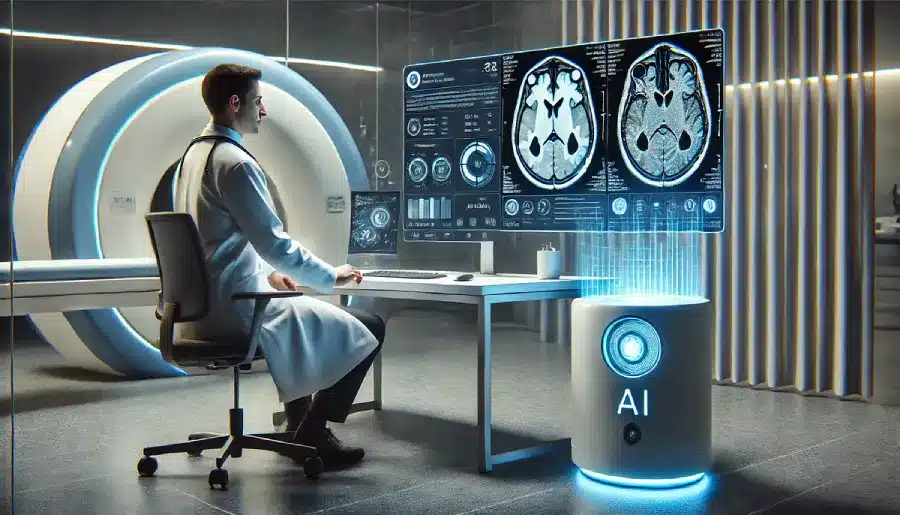
Hospitals and biotech companies across the healthcare sector have a lot to gain from AI. They now rely on machine learning models for early disease detection, radiology image analysis, patient monitoring, and drug discovery. By 2025, AI algorithms will help identify anomalies in X-rays and MRIs at up to a 90% diagnostic accuracy rate, comparable to and sometimes superior to human specialists across multiple domains.
Generative AI supports pharmaceutical research in ways we have not seen before. According to McKinsey, AI-based molecular modeling can cut drug discovery time by 50% and reduce R&D costs by billions. Hospitals implementing predictive analytics can flag patients at risk of readmission early, while chatbots handle basic inquiries and scheduling with ease.
2. Financial Services & Banking

Finance has never moved faster, and much of that speed comes from artificial intelligence. Today, AI and automation work alongside data analytics to reshape how banks handle everything from fraud detection to risk scoring and credit modeling. Even algorithmic trading now runs on machine learning models, and JPMorgan Chase alone processes billions of transactions daily, cutting fraud losses by millions.
Insurers are catching up just as fast, using AI for automated claims processing and smarter underwriting, while chatbots handle customer service around the clock. According to a Deloitte report, financial institutions that adopt these tools reduce operational costs by 20 to 40%, and results like that are simply hard to ignore.
3. AI in Education
Adaptive platforms like Duolingo Max, Khanmigo, and ChatGPT are reshaping classrooms across universities worldwide. These AI tools analyze student performance and automatically adjust the lesson pace, delivering real-time tutoring that personalizes learning and content for each individual.
UNESCO research confirms AI-enabled learning systems can improve student performance by 15–20%. Teachers can automate grading, freeing time for meaningful human instruction, while consistent feedback keeps students on track.
4. Manufacturing and Industry
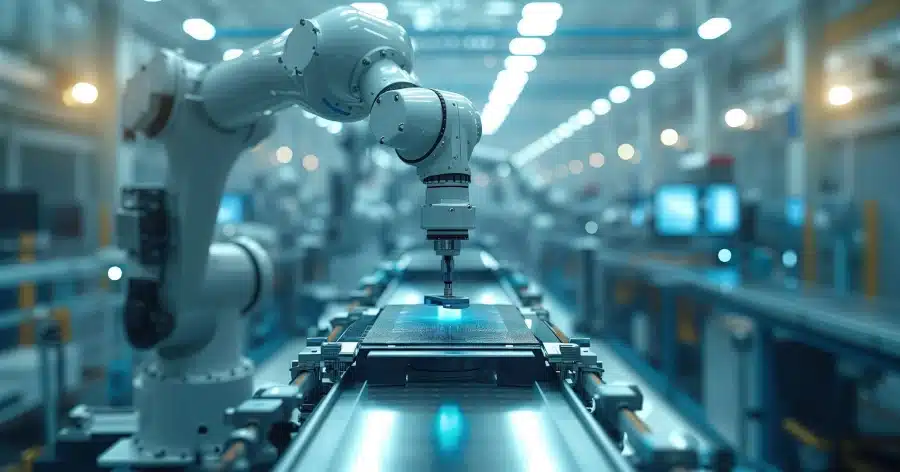
Factories are revolutionizing operations through AI-powered predictive maintenance, where sensors help forecast equipment failure before it happens. Machine vision systems with automated quality control use predictive models to detect defects in real time, saving millions in waste and unplanned downtime.
Robots paired with integrated AI and reinforcement learning no longer depend on manual programming since the system adapts tasks dynamically on the floor. McKinsey reports 20–25% productivity gains and a 30% reduction in maintenance costs across manufacturing plants that have fully adopted predictive maintenance.
5. Transportation and Logistics
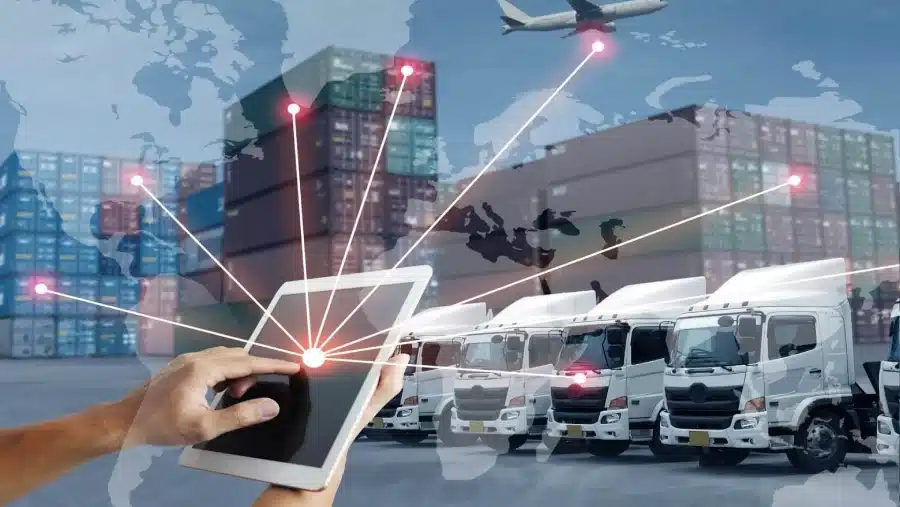
Logistics companies like UPS and DHL now deploy AI-powered systems to cut idle time and lower emissions. AI-driven fleet management uses predictive algorithms to find the shortest and least costly routes, keeping the entire supply chain ecosystem efficient. Smart routing also supports autonomous vehicles and reduces fuel waste across fleets.
Research Gate studies show AI can improve delivery times by 10-15% in Europe and the U.S., while fuel efficiency gains reach 25%. Autonomous trucking pilot programs are on the rise in China, and drone delivery is expanding globally. These solutions reduce operating costs and are driven by AI.
6. Media and Entertainment
The creative industry has been reshaped by AI, from VFX automation to generative AI tools that produce video, images, music, and text. Studios now use script drafting tools alongside recommendation engines and content localization to reach global audiences faster.
Netflix and gaming platforms use AI algorithms to decide which thumbnails, trailers, and advertisements appear for each user. Virtual actors, AI editing systems, and smart post-production workflows speed up delivery, directly influencing what viewers watch from the moment they start a session.
7. Energy and Utilities
AI is making energy systems smarter by helping balance power grids in real time. Through predictive algorithms, it can anticipate outages before they happen and manage electricity loads more efficiently, pushing renewable integration forward and helping utilities improve reliability across the board.
The International Energy Agency predicts AI can cut operational costs by up to 15% in power generation. It interprets seismic data for oil and gas exploration, identifies optimal wind turbine angles, and forecasts solar output, making the shift toward renewables more practical and data-driven.
Conclusion
Artificial Intelligence is reshaping manufacturing, healthcare, finance, and beyond. From factories to hospitals, courtrooms to classrooms, the shift is clear: automating repetitive tasks, organizing structured data, and strengthening infrastructure are driving modern productivity. The industries benefiting most already have strong economic incentives to scale. Honestly, staying manual is no longer optional.
In the AI era, winners won’t just be those adopting AI tools but those redesigning workflows to build a single intelligent system of work. Real value creation comes when you combine technology with human judgment at the core decision-making level. Embedding AI into governance and training human talent moves organizations to the next stage. The results won’t come from the tools alone.